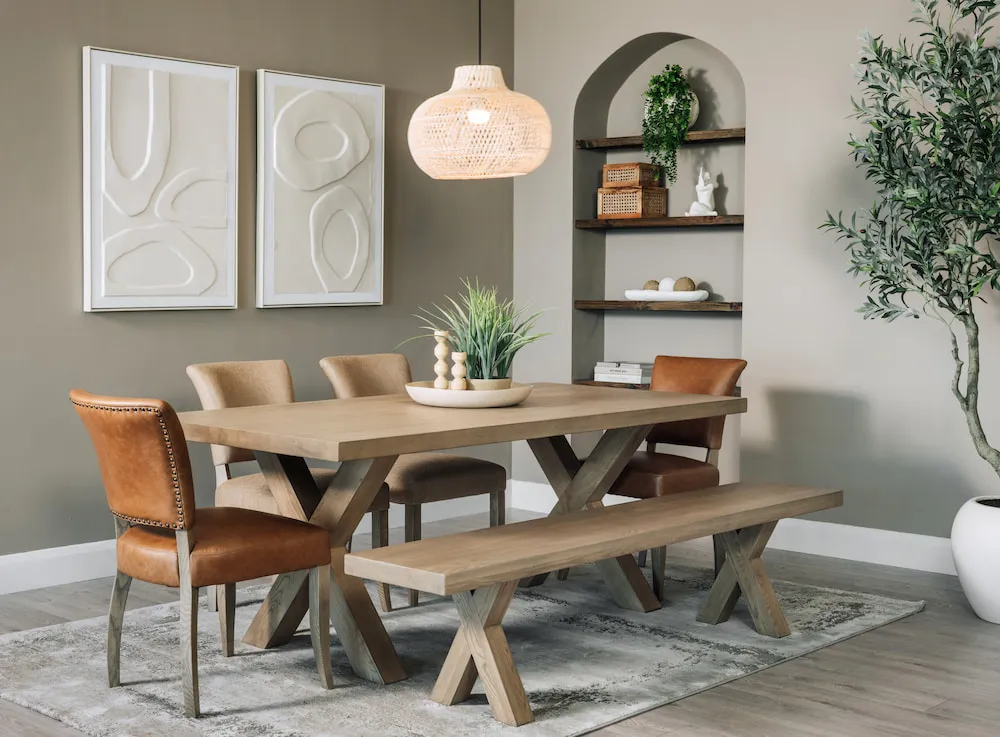
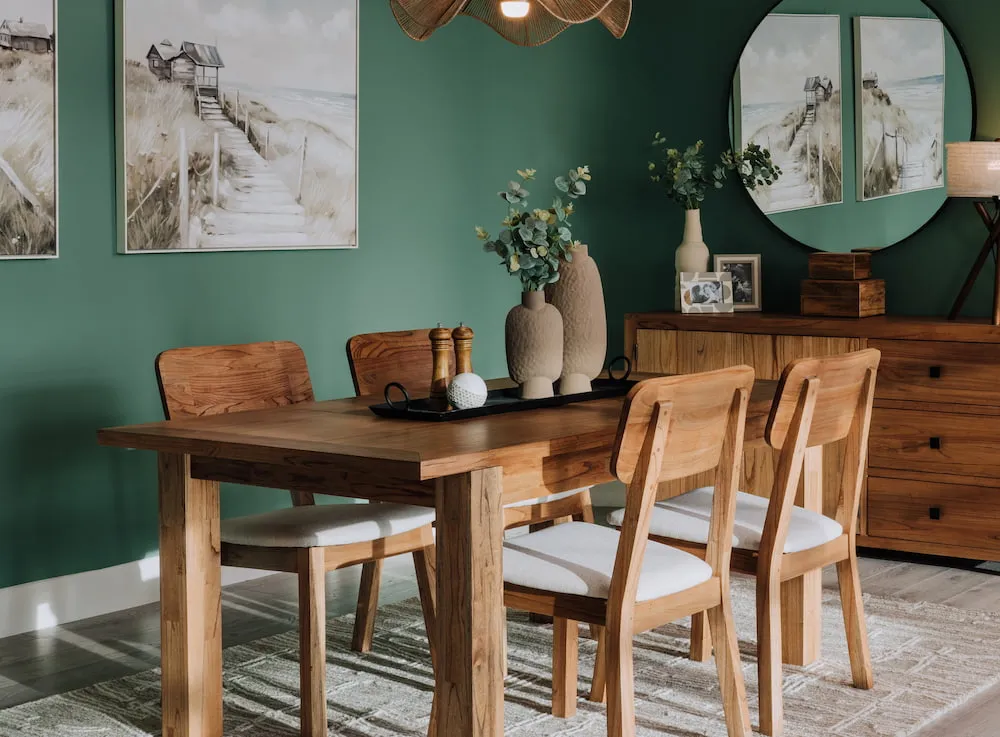
Finding the best table for your home and lifestyle is easier when you know what to look for. From choosing the right size and shape to deciding between different materials and designs, there are several factors to consider before making your purchase.
In this EZ Living Furniture blog, we compare the most popular table shapes, sizes, designs, and features to help you understand the differences between each option. Whether you're searching for a dining table for family meals or a coffee table for your living room, we'll help you find the right fit for your home.
Understanding Table Measurements
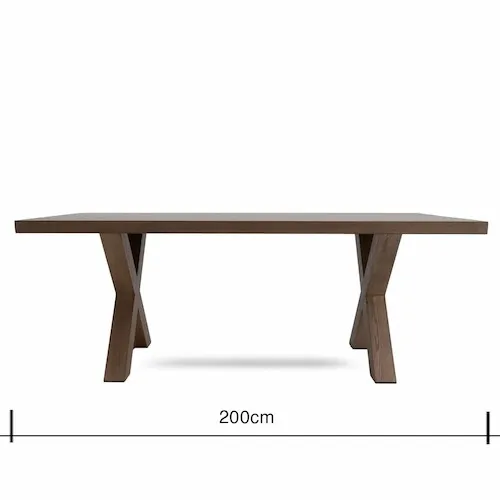
Before choosing a table, it's important to consider the dimensions of the table itself and the space where it will be placed.
Start by measuring the width and length of the available space. Then consider the table's overall dimensions, including its height, not forgetting to allow enough room around it for comfortable movement.
For dining tables, it's important to account for any extensions. An extendable dining table will usually show its measurement when closed, so check the extended dimensions too and make sure you have enough room to accommodate it when fully extended.
The number of people you plan on seating will also influence the size of the table you require. A larger option might seem like a better decision because it will seat more people, but if it impacts your ability to move comfortably around the room, this isn't necessarily the best option for you.
| 4-Seater Dining Table | 4-6 Seater Dining Table | 8-10 Seater Dining Table | 10-12 Seater Dining Table | |
|---|---|---|---|---|
| Key Features | 42"–48" (107cm-122cm) | 60"-78" (152cm-198cm) | 72"-96" (183cm-244cm) | 84"-120" (213cm-305cm) |
| Best For | Small dining areas & kitchens | Everyday family dining | Family dining & entertaining | Larger families & frequent entertaining |
Please note: Table length isn't an exact science; the table measurements above are a general guide. The amount of seating depends on the table's shape, width, leg design, and how much space you want for each person.
Understanding Table Shapes
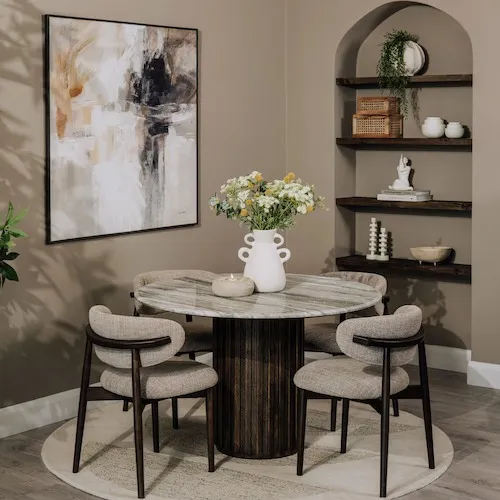
The shape of the table you choose is important. Some can offer more surface area, while others are better suited to homes with small children. There are four main table shapes, each of which comes with its own unique benefits, and should be carefully considered before purchasing your side table, coffee table, console table or dining table.
| Square Tables | Round Tables | Oval Tables | Rectangular Tables | |
|---|---|---|---|---|
| Key Features | Can be placed against a wall | Has rounded edges | Typically, more stable with two legs & features rounded edges | More surface area & can be placed against a wall |
| Best For | Small rooms with limited floor space | Small rooms with limited floor space & homes with small children | Larger rooms & homes with small children | Largest rooms & suitable for everyday dining & entertaining |
Understanding Table Designs
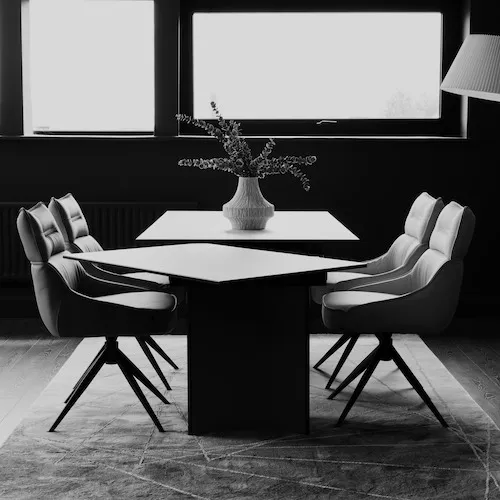
There are two main table designs: fixed and extendable:
Fixed Tables: A fixed table cannot be extended. The entire surface area of a fixed table is on display and is designed to cater to a set number of people/a set number of objects.
Extendable Tables: An extendable table offers more flexibility, especially when it comes to dining tables. On initial inspection, it can look like a typical fixed model, but the difference is the additional leaf(s) permanently hidden within/underneath the table or accompanying the table (ready to be attached later).
There are many table designs to consider, each with its own unique design:
- Traditional Leaf: The ends of the table slide apart to reveal a space for the table leaf in the centre. Depending on the design, the leaf can be stored within the table or will need to be stored separately (and in similar conditions, i.e. sunlight, to ensure an even fade for the table and leaf(s).
- Butterfly Leaf: The ends of the table slide out to reveal leaves within the centre of the table. Always attached to the table, the centre leaves are folded in half for compact storage and can be flipped out to create an additional middle section of the table.
- Drop Leaf: One or both ends of the table are collapsible and permanently attached to the table. When not in use, the leaf(s) hang down by the table’s legs, but can easily be lifted and set into place to extend the surface area.
- Stow Leaf: The extension(s) of the table are stored underneath the end(s) of the table. To extend, simply pull out the leaf(s) and then raise them to fit into place and on the same level as the rest of the table.
- Revolving Leaf: The extendable leaf(s) are hidden underneath the end(s) of the table. While all models differ, typically the centre part of the table can be rotated to engage the revolving mechanism. Once engaged, the leaf(s) will appear from under the table and slide up and click into place next to the rest of the table.
| Fixed (No leaf) | Traditional Leaf | Butterfly Leaf | Drop Leaf | Stow Leaf | Revolving Leaf | |
|---|---|---|---|---|---|---|
| Key Features | Strong, durable, & no moving parts | Versatile & saves space when closed | No lifting leaves into place | Space-saving, often lightweight & movable | Does require some strength | No strength required |
| Best For | Consistent family dining | Occasional entertaining | Growing families & guests | Apartments & small homes | Growing families & guests | Growing families & guests |
Understanding Table Leg Design
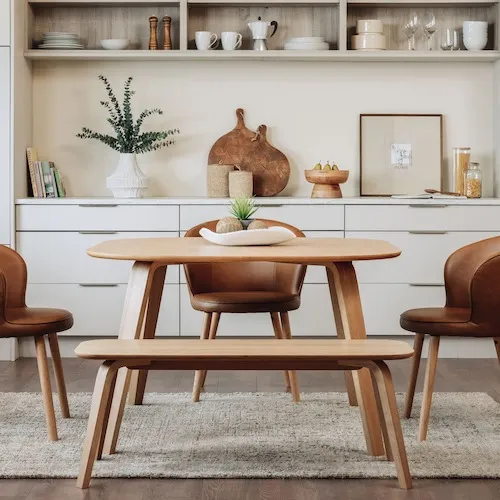
While a table's shape and features can heavily impact the space in a room, the leg design of a table can impact the stability of the table and the available leg room. Every leg design offers something different and should be carefully considered before making the final decision:
Pedestal Table Legs: A single pillar-style leg that predominantly features on round and oval tables.
Two Pedestal Table Legs: Two separate pedestal-style supports beneath the tabletop.
Traditional Table Legs: Four separate table legs typically only connected to the underside of the table.
Trestle Table Legs: Trestle legs are table legs at either end of the tabletop, connected by a horizontal centre support.
| Pedestal Table Legs | Two Pedestal Table Legs | Traditional Table Legs | Trestle Table Legs | |
|---|---|---|---|---|
| Key Features | Central support provides additional leg room | Two substantial supports & plenty of leg room | Four separate legs provide stability | Strong support at both ends of the table & allows for good leg room |
| Best For | Round & oval tables & homes where leg room is important | Particularly suited to large dining tables | Variety of table shapes & sizes | Large dining tables |
Understanding Materials
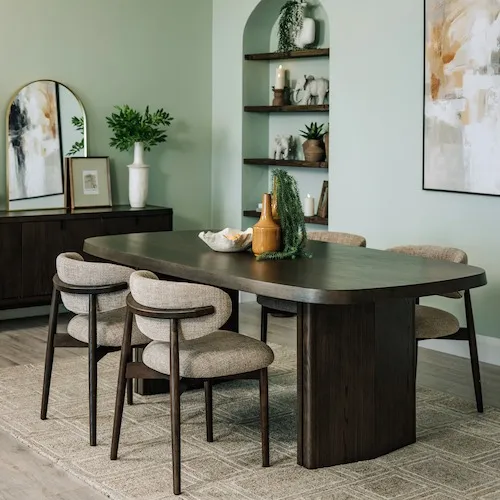
Tables are made from a variety of different materials. Some are more practical, others are more durable, but all should be carefully studied before deciding on the one for you. Some of the most common materials used for tables are:
Wood: Strong and durable, wooden tables are the most common table type on the market. Hardwoods and softwoods are both used equally, but each has its own unique qualities.
Glass: Tables featuring glass tabletops are easy to clean and don't require any regular maintenance, which might be why they are a popular choice.
Marble: Heavy and beautiful, marble tables are a great choice for homes that crave that timeless look.
Melamine: Scratch-resistant, lightweight, and easy to clean, melamine is a top pick for homes with small children.
Ceramic: Highly heat-resistant and durable, ceramic is a practical choice for a variety of households.
Metal: While not a typical material used for indoor tables, metal is a strong and durable material that is often used for table legs, frames, and bases.
Veneer: More of a protective coating that can be found on wood and other materials. Veneer is a thin layer of real wood applied to a different core material, offering the appearance of real wood while being more affordable and lightweight.
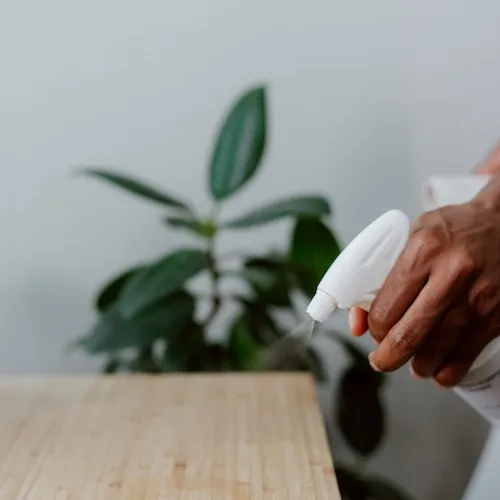
Table Care
| Wood | Glass | Marble | Melamine | Ceramic | Metal | Veneer | |
|---|---|---|---|---|---|---|---|
| Cleaning Tips | Wipe spills with a soft, damp cloth | Soft cloth & a suitable glass cleaner | Soft, damp cloth & a mild cleaner. Avoid using harsh or acidic cleaning products | Soft, damp cloth & mild cleaning solution | Soft, damp cloth & mild cleaning solution | Wipe with a soft cloth & mild cleaning solution | Wipe with a soft cloth & mild cleaning solution |
| Care Tips | Generally, requires sanding & oiling or waxing, depending on the finish | Regularly check for chips, cracks, or scratches. Avoid placing very hot items directly on the surface | May require occasional sealing to protect it from staining and moisture | Requires little maintenance beyond regular cleaning | Requires little maintenance beyond regular cleaning | Check for signs of rust or corrosion. Some finishes may benefit from an occasional protective treatment. | Requires little maintenance but avoid excessive heat & moisture. Check regularly for lifting or damage. |

FAQs
What is the difference between a Six-Seater and Eight-Seater Dining Table?
A six-seater is a practical choice for everyday dining and smaller dining spaces, while an eight-seater provides additional space for larger families or those who regularly entertain. It's important to always consider the dimensions of the table and the available space rather than relying on the seating number alone.
Which is better: a Round, Rectangular, or Oval Dining Table?
Round tables work better in homes with small children because of their rounded edges. They work better in smaller spaces and help to encourage conversation. Rectangular dining tables offer more surface area and are better suited to larger spaces. Oval tables are similar to rectangular tables in that they are typically suited to larger spaces, but with the difference of their rounded edges, they make a better choice for homes with small children.
What is the difference between a Fixed and Extendable Dining Table?
A fixed table is a set size and is a good option if you only ever need the same amount of seating (i.e. everyday family dining, etc.). Extendable tables offer flexibility. It allows you to keep the table compact for everyday dining and then extend the seating capacity on the occasion when you might need extra seating, such as entertaining.
What is the difference between a Pedestal Base & Four Table Legs?
Pedestal bases feature one or more central supports, typically a single thick column whereas four-leg dining tables have a traditional base with one leg positioned on each corner.
What is the difference between Solid Oak & Oak Veneer?
Solid oak is a full piece of oak timber, whereas oak veneer is a thin layer of oak placed over the core of another material. Solid oak offers durability and repairability and will last a lifetime if properly cared for. Oak veneer is typically chosen over solid oak because of its price point and weight, usually significantly lower and lighter than solid oak.
Is Solid Oak worth the extra money?
While solid oak may cost more upfront, when compared with other materials, its long lifespan and repairability often make it more cost-effective over time. Solid oak is durable, strong, and has a certain beauty that oftentimes can’t be replicated. Solid oak will last a lifetime if properly maintained (using the recommended care instructions).
What is the difference between marble-effect and real marble tables?
Marble-effect refers to the pattern of real marble. It's not real marble stone but is designed to look as though it is. The pattern can be duplicated in a variety of materials, including but not limited to, laminate and porcelain. Real marble is a heavy, natural stone formed from limestone that has recrystallised; it features unique veining and has a distinctive matte-like shine that's hard to duplicate. Real marble can dull or become damaged if the wrong cleaning chemicals are used, so it's important to refer to the manual/care guide that comes with your specific marble item.
Which is better: glass or wood dining tables?
Glass tables are easy to clean and are a popular choice for those wanting a maintenance-free table, as there is no regular oiling or waxing required. However, glass tables, even when made from tempered or toughened glass, are prone to chips and scratches. Glass tables also require frequent cleaning to remove fingerprints, smudges, and dust, especially when placed in high-use areas.
Wood tables are highly durable and can last a lifetime with the appropriate care. They require less cleaning because the surface doesn't draw attention to dust, smudges, and fingerprints; however, they do require occasional care. Every wooden table is different, and each has its own set of care instructions, but typically wood requires sanding and oiling/waxing to maintain its beautiful appearance over time.
Which dining table material is most scratch resistant?
Melamine and ceramic are the most scratch-resistant materials, but remember no material is truly indestructible; all can be damaged and need to be cared for in different ways.
Which dining table material is best for families?
It all depends on what's important to that family. Low maintenance? Scratch-resistance? Durability? There isn't any material that does it all, so it's all about deciding what the priority is for you and your family and investing in the one that best suits your needs.
We hope you enjoyed this content and found it useful and informative. We aim to share our expertise and knowledge with our customers, and to do this, we have a team of content creators working tirelessly behind the scenes. We do not use AI to create our content. Click this link to find out more about our team and content guidelines.
Share this post